

Electric Fence Fault-Finding — Sandton & Northern Suburbs
Electric Fence False Alarm Repairs
Electric Fence False Alarm Repairs —Electric fence false alarms with no obvious cause? We find the intermittent trigger — weather, vegetation, settings, marginal faults — and stop the nuisance alarms across Johannesburg. 061 402 6299.
Call For a Free Quote
061 402 6299
Request a Callback
Diagnosed properly, fixed once
Electric Fence False Alarm Repairs — Stopping Alarms With No Obvious Cause
A false alarm is the most frustrating fault of all: the fence cries wolf, you inspect it, and you find nothing wrong. It happens at odd hours, in particular weather, or seemingly at random, and previous companies may have shrugged and left it. The truth is there is always a cause — it is simply an intermittent one that comes and goes around the alarm threshold, which is exactly why it is missed by a quick look. This guide explains what really triggers nuisance alarms and how we track them down. Paskwa Gate Repairs resolves false-alarm faults across Sandton, the northern suburbs and greater Johannesburg.
The distinction worth making is between a true alarm — a wire genuinely shorting or cut — and a false alarm, where nothing is actually breaching the fence but the energiser still trips. False alarms come from marginal leaks, environmental triggers and settings that leave the system on a knife-edge. Find the marginal cause, or restore proper margin, and the nuisance stops.
Know your system
How an Electric Fence Works — in Plain Terms
Before getting to false alarms, it helps to understand what the system is doing, because almost every fault makes sense once you do. An electric fence has three jobs rolled into one: it deters (a visible, shocking barrier), it detects (an alarm when the perimeter is breached), and it delays (a physical obstacle that buys time). The component that makes all three possible is the energiser.
The energiser takes mains, battery or solar power and converts it into a short, high-voltage pulse — roughly one a second — that it sends along the live wires at around 7,000 to 9,000 volts on a healthy system. The wires are held off the earthed brackets and posts by insulators, so the pulse stays on the line. When anything bridges a live wire and the ground — a person, an animal, a branch, a cut tool — current flows through it to earth and back to the energiser through the earth wires and earth stakes. That flow is the shock, and it is also what the energiser measures: when the returning voltage drops, it knows the line has been loaded or breached and it raises the alarm.
So a working fence needs four things in good order: a healthy energiser making a strong pulse, intact insulators keeping the pulse on the live wires, a good earth system to complete the circuit, and a sound, correctly-tensioned line of wire. When one of those drifts out of condition, you get the symptoms people call us about — no shock, constant alarms, beeping, or a dead fence. Knowing which of the four has failed is the whole of the diagnosis.
This is also why electric fence faults resist guesswork. The same symptom can have several different causes across those four systems — a weak shock might be a bad earth, a partial short or a tired energiser — and the only reliable way to tell them apart is to measure: open-circuit output at the energiser, earth-return voltage, and readings along the line. A technician who tests rather than swaps parts gets to the real cause faster and, in the end, cheaper for you.
The real triggers
What Actually Triggers a False Alarm
Nuisance alarms cluster around a few intermittent causes — the kind that vanish by the time you go to look:
Animals, birds and reptiles
A bird perched across two wires, a cat on the wall, or a gecko on the energiser can momentarily bridge the circuit. Wildlife is a classic source of the 3 a.m. alarm that leaves no trace by morning.
Wind moving vegetation or loose wires
A branch swaying into the line, or a slightly loose strand swinging onto an earthed bracket in a gust, produces alarms that track the weather and stop when the wind drops.
Dew, rain and moisture
Overnight dew on a branch resting near the wire, or dirty rainwater in a hairline insulator crack, conducts just enough to drop the return voltage for the few pulses needed to trip the alarm — then dries and disappears. This is why so many fences alarm at dawn or only when it rains.
A marginal fault sitting on the threshold
A small short — a touch of vegetation, a slightly cracked insulator, a marginally low wire — that pulls the return voltage to right around the alarm threshold will trip only when something tips it over, behaving normally the rest of the time.
Output or threshold set too tight
If the energiser's output or alarm sensitivity is set so the fence runs with little margin, normal small variations — temperature, humidity, a leaf — are enough to trigger it. Correcting the settings restores healthy headroom.
A failing battery or marginal power
A backup battery near end of life can let the output sag just enough, intermittently, to trip the alarm — particularly during and after power cuts.
Pattern is everything
Reading the Pattern to Catch an Intermittent Fault
Because a false alarm is intermittent, the single most valuable diagnostic tool is the pattern — when it happens. Alarms at dawn or overnight point to dew or wildlife; alarms only in rain point to a cracked insulator or moisture ingress; alarms in wind point to a moving branch or a loose wire; alarms that follow power cuts point to the battery; and alarms with no pattern at all point to settings or a marginal energiser fault.
We ask you to note the timing and conditions before we arrive, then reproduce or infer the trigger on site — wetting a suspect insulator, flexing a suspect wire, checking the line under the conditions that set it off. Catching an intermittent fault is detective work, and the pattern is the best lead there is.
How we fix it
How We Stop the Nuisance for Good
The fix follows the trigger: prune and clear vegetation well back from the line; replace the cracked insulator that leaks in the rain; re-clip and re-tension loose or sagging strands so wind cannot move them onto earth; deter perching wildlife where it is the culprit; replace a failing battery; and where the system is simply set too tight, restore correct output and a sensible alarm margin so normal small variations no longer trip it.
We then run the fence and re-check the return voltage to confirm it now sits comfortably above the alarm threshold with healthy headroom, so a leaf or a damp morning will not set it off again. The aim is not just silence today, but margin — a fence that only alarms when something is genuinely wrong.
True vs false
True Alarm or False Alarm — and Why the Difference Matters
It is worth being clear about the difference, because it changes how seriously to treat each event. A true alarm means the fence has genuinely been compromised — a wire cut, pulled down or firmly shorted — and it demands an immediate response, because it may be an intrusion. A false alarm means nothing is actually breaching the perimeter, but the system is tripping on a marginal or environmental trigger.
The danger of unresolved false alarms is that they erode trust in the system. After enough 3 a.m. cries of wolf, people stop reacting, mute the alarm, or disarm it — and then a true alarm goes unanswered. Resolving false alarms is therefore not just about a good night's sleep; it is about keeping the alarm credible so that when it does sound, you and your armed response take it seriously. A fence you can trust is one that only alarms when it should.
Keep it credible
Preventing False Alarms Long-Term
A well-maintained, properly-set fence simply does not nuisance-alarm. The measures that keep it credible:
- Regular vegetation clearance — the biggest single source of false alarms, and worst in the summer growing season.
- Proactive replacement of cracked and brittle insulators before they start leaking in the wet.
- Re-tensioning and re-clipping of any strand that could move onto earth in the wind.
- Battery testing under load and timely replacement so the output never sags into the threshold.
- Correct output and alarm-margin settings so the fence runs with comfortable headroom, not on a knife-edge.
- Where wildlife is the trigger, practical deterrents at the specific perch or crossing point.
The local factor
Load Shedding, Surges and Your Electric Fence
No single factor damages electric fences in Johannesburg more than the power situation, and it is worth understanding because it shapes both why fences fail and how to protect them. During an outage, a mains energiser switches to its backup battery and the fence keeps pulsing — exactly as designed. The damage comes not during the outage but at the moment power is restored, when the grid often returns with a voltage spike. That surge travels into the energiser's power-supply stage and, on a board with no surge protection, punches straight through sensitive components.
This is why so many energiser failures appear in the hours after the lights come back on, and why a unit can survive many outages and then die on one. There is a slower, parallel cost too: every deep discharge during a long outage ages the backup battery faster than its rated two-to-three-year life, so heavy load shedding tends to wear out the battery and stress the board on overlapping timelines, producing dead fences, beeping and false alarms.
The defences are inexpensive relative to the damage they prevent: a surge protector on the supply, an intact and correctly-earthed lightning diverter, and, for properties that keep losing units, conversion to a solar energiser that runs off its own panel and battery and never sees the mains spike at all. We fit surge protection as a matter of course on board replacements, because protecting the repair is part of doing it properly.
Before you call
Safe Checks You Can Do First
None of these involve touching the fence wires — never test an electric fence by hand. They are quick checks that sometimes save a call-out and always help us help you faster over the phone.
- Note exactly when the alarms happen — dawn, rain, wind, after power cuts, or random — and tell us. With an intermittent fault, the pattern is the best clue there is.
- From a safe distance, look for vegetation near the wire or a visibly loose or sagging strand, and mention anything you see.
- Check whether a power cut precedes the alarms, which points us at the battery.
- Do not touch or climb the fence to investigate; leave the high-voltage side to us.
Right now
Is This an Emergency? What to Do Before We Arrive
Not every electric fence fault is an emergency, and knowing the difference helps you act sensibly. If you have found a cut or pulled-down wire, treat it as a possible intrusion attempt: alert your armed-response company first, keep people and pets away from any loose, possibly-live strand, and call us to repair and re-test — including confirming the alarm actually reached your monitoring. If the fence is simply dead, weak, beeping or nuisance-alarming with no sign of tampering, it is not a 999 situation, but it does mean your perimeter is compromised, so it is worth sorting quickly rather than living with it.
Either way, do not try to investigate the high-voltage side yourself — no touching the wires, no opening the energiser. The safe, useful things you can do are all observation: note the symptom precisely, when it started, and whether it follows a pattern (after a power cut, only in rain, only at night). If you can do so safely from the ground, a quick photo of the energiser's display and of anything obviously wrong on the line is genuinely helpful.
Then call or WhatsApp us for a free telephonic diagnosis. With the brand of your energiser, its status light or screen message, and the symptom pattern, we can usually tell you the likely cause and an honest price range before we travel, and bring the right parts on the vehicle. Close to our Broadacres base that often means a same-day, single-visit fix; further out we will give you an honest planned time. The two minutes you spend describing it accurately is what turns a repair into a one-visit job.
A word on safety
Why Electric Fence Work Is Not a DIY Job
An electric fence is a high-voltage system. A healthy energiser delivers a pulse of several thousand volts, and while the design is intended to deter rather than injure a healthy person, the high-voltage side is not something to probe, open or repair without the right knowledge and equipment. The safe checks we suggest are deliberately limited to things you can do without touching the wires or opening the unit — looking, listening and noting — precisely because everything beyond that belongs with a technician.
There is a second reason beyond personal safety: a fence worked on incorrectly can be left non-compliant, under-performing, or falsely reassuring. A botched earth, a wrong-rated energiser, a join that becomes a short, or an alarm output left disconnected can all leave a fence that looks fine and protects nothing. We carry the test equipment to diagnose properly, the stock to repair in one visit, and the knowledge to leave the system both safe and genuinely working — backed by a six-month guarantee, which a DIY attempt cannot give you.
Brand-by-Brand Guide
Electric Fence Brands We Work With
South African electric fences are dominated by a handful of brands, and knowing the quirks of each is half the job of a fast, correct repair. We carry the common units and spares on the vehicle, so most faults are diagnosed and fixed in a single visit across Johannesburg.
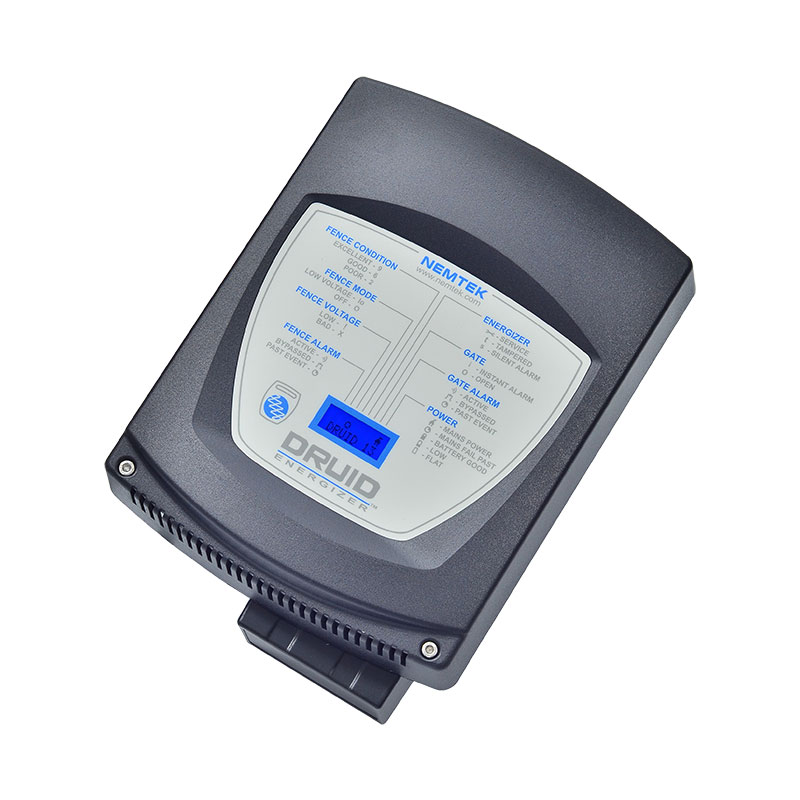
Nemtek — Wizord, Merlin, Stealth & Druid Electric Fence
Nemtek is the most common security energiser on Johannesburg homes, complexes and estates, and the brand we replace most often. The Druid LCD range uses Nemtek's Adaptive Power Technology (APT), which senses how much power the fence can take before it arcs — maximising voltage and cutting false alarms. We repair board-level faults where economical and stock the popular units for same-day replacement.
Stafix Econoflex electric fence energisers
Stafix is reliable, SANS-approved and widely installed across Gauteng — and because Stafix and Nemtek share most installation hardware (brackets, wire, bobbins), a Stafix board swap rarely means re-doing the fence. We follow the Stafix six-step fault-finding sequence: check the power supply and battery, test the energiser open-circuit, then the lightning diverter, the lead-out, the earth and finally the fence line.
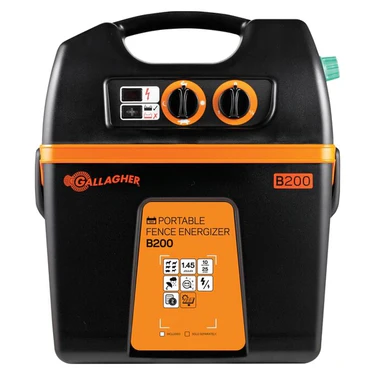
Gallagher B10, B30, and B80 electric fence energisers
Gallagher energisers are built for long fence lines and heavy vegetation load — the right choice for Johannesburg's larger plots, smallholdings, estate boundaries and game fencing that can run to several kilometres of wire. The job here is matching the joule rating to the line so the fence holds voltage end to end; as a rule of thumb, one joule drives roughly 10 km of clean wire, far less where vegetation competes.
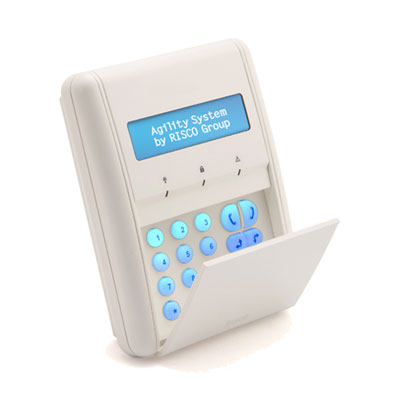
DSC and Risco electric fence alarm systems
The shock deters; the alarm protects. The energiser's alarm output is what signals your armed-response company when a wire is cut or shorted — and on far too many Johannesburg fences it was never wired in. We integrate the output into DSC and Risco panels, set the gate-bypass so opening your gate doesn't false-alarm every time, and confirm the trigger end to end.
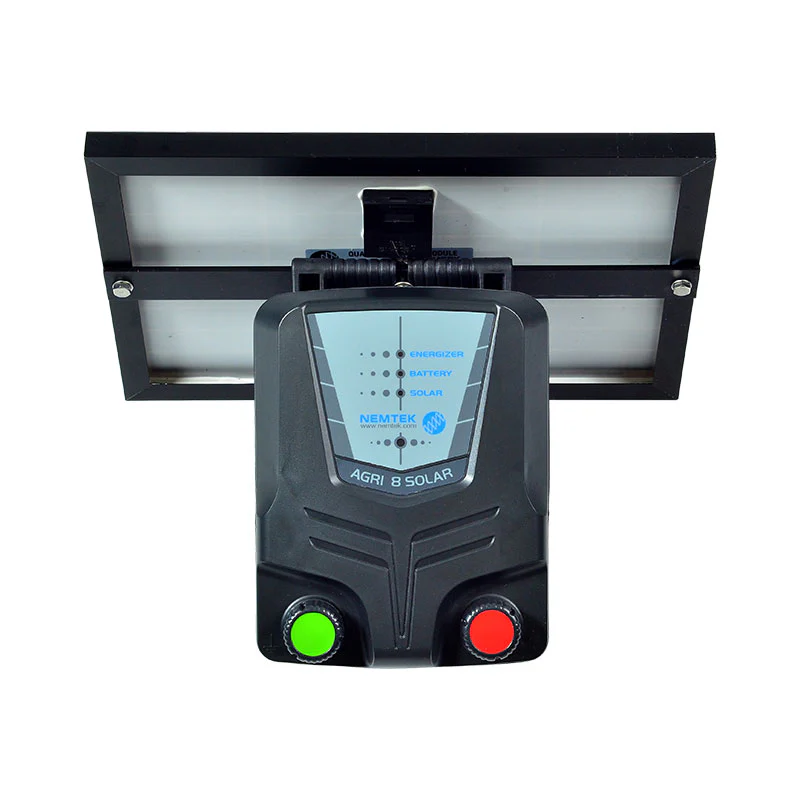
Solar electric fence energisers
Solar electric fence energisers provide uninterrupted perimeter protection during load-shedding and power outages. These systems are ideal for off-grid properties, farms, estates, and remote security installations. Solar energisers combine rechargeable battery backup, solar charging technology, and efficient power management for continuous operation.
How we work
Our Process, Pricing & Guarantee
Every job starts with a free telephonic diagnosis. Tell us the symptom — the pattern of the alarm, the status light, whether the fence is dead or weak — and we will give you the likely cause and an honest price range before anyone drives out, so there are no surprises. The call-out is from R450 and is waived when you proceed with the repair.
On site, we diagnose with proper test equipment rather than swapping parts and hoping: open-circuit output at the energiser, earth-return voltage, and directional fault-finding along the line. We repair before we replace, and where a replacement is genuinely the better value we say so and explain why on the numbers, never on pressure. Because we carry the common stock on the vehicle, most faults are fixed in a single visit.
Then we re-test the whole system — output, earth and the alarm — so you leave with a fence that shocks properly and warns you if it is breached, not just one that has had its immediate symptom silenced. Every repair carries a six-month guarantee, and you deal directly with our team throughout: no call centres, no commission-driven upselling.
Myth-busting
Common Misconceptions About Electric Fence Faults
“It shows voltage, so it must be working”
A tester reading high voltage only proves the energiser is making a pulse — not that the fence shocks or alarms correctly. A fence can read 8,000 volts and give almost no shock if the earth is poor, because the shock depends on current completing the circuit through the ground. The meaningful tests are earth-return and the shock under load.
“The alarm is faulty because it keeps going off”
Far more often the alarm is working perfectly and correctly reporting a real fault on the line — vegetation, a cracked insulator, a sagging or cut wire. The alarm is the messenger; silencing it leaves the actual problem in place. The fix is to find what is tripping it.
“A new battery will fix a fence that keeps dying”
Sometimes — but if a fresh battery fails within months, the real fault is the charging circuit or a surge-damaged board mismanaging it. Replacing batteries on repeat without diagnosing the charger just throws money away.
“Any electrician can issue my fence COC”
No. An electric fence Certificate of Compliance may only be issued by an installer registered with the Department of Employment and Labour for that purpose — it is separate from the ordinary electrical COC and a separate registration.
Questions answered
Electric Fence False Alarm Repairs — FAQs
Why does my electric fence alarm for no reason?
There is always a reason — it is just intermittent. The usual triggers are dew or rain on a marginal short, wind moving a branch or loose wire, wildlife bridging the wires, a failing battery, or settings so tight the fence runs with no margin. We find the intermittent cause and either clear it or restore proper headroom.
Why does it only alarm at night or early morning?
Most often dew and wildlife. Overnight moisture bridges a marginal short until the sun dries it, and nocturnal animals or birds momentarily bridge the wires — both leaving no trace by the time you inspect in daylight. We trace and clear the specific cause.
Can the alarm settings be the problem rather than a fault?
Yes. If the output or alarm sensitivity is set so the fence runs with little margin, normal small variations — humidity, temperature, a leaf — can trip it. Restoring correct output and a sensible alarm margin often stops nuisance alarms on a fence that is otherwise sound.
Do I need a COC certificate for my electric fence?
Yes — a valid Electric Fence System COC is required for every new installation and whenever a property with an electric fence changes ownership. It's a separate certificate from your house electrical COC. Minor repairs like broken wires don't require a new one, but replacing the energiser does. We inspect against SANS 10222-3 and arrange certification through a registered installer.
How do you find an intermittent fault that isn't there when you arrive?
Detective work guided by the pattern, plus reproducing the conditions — wetting a suspect insulator, flexing a suspect wire, testing under the circumstances that set it off — and confirming the return voltage sits comfortably above the alarm threshold once we have addressed the cause.
Is a constant alarm a sign someone is trying to break in?
It can be — a cut or pulled-down wire will alarm, and that is the system doing its job. If you find damaged or missing strands, treat it as a possible intrusion attempt, alert your armed response, and call us to repair and re-test, including confirming the alarm output actually signals your monitoring.
How Many Strands Does My Electric Fence Need?
SANS 10222-3 specifies a minimum of 5 live strands for a compliant installation. Most Johannesburg residential installations use 6–8 strands for better coverage. The strands must be properly spaced, tensioned and earthed, and warning signs must be displayed at regular intervals. All our installations comply with SANS 10222-3 and include a COC certificate.call 061 402 6299 for emergency repair.
My fence alarms constantly — what's wrong?
Constant alarming almost always means a wire is shorting to earth — vegetation touching the line, a sagging strand, a fallen bracket or a cracked insulator. We fault-find the affected zone and clear or repair it, usually R650–R1,400. It's rarely the energiser itself when the symptom is over-alarming rather than no power.
How do you find the short without checking the whole fence?
A directional fault-finder reads the pulse and points toward the leak, and zone isolation tells us which section is at fault. We locate the short to within a metre or two rather than walking the whole perimeter blind, which keeps the time — and your bill — down.
How Long Does Electric Fence Installation Take?
A standard residential electric fence installation in Johannesburg takes 1–3 days depending on perimeter length and complexity. We usually start within 48–72 hours of the free site assessment. The COC certificate is issued on the day of completion.
Why does my fence have power but no shock when touched?
A fence that reads voltage but doesn't deliver a proper shock is nearly always an earthing problem — the most common cause of weak output. A good earth needs at least three galvanised stakes driven into moist ground. We test earth resistance and correct it; sometimes the energiser is also undersized for the line length and needs upsizing.
Should I just disarm the fence alarm to stop the nuisance?
No. Disarming or muting removes the warning that also tells you when a wire is genuinely cut. The better answer is to fix the trigger so the alarm becomes trustworthy again — silent unless something is really wrong.
How much does it cost to stop false alarms?
Usually modest once the trigger is found — vegetation clearance or re-tensioning R650–R1,200, a cracked insulator R150–R400, a settings correction R450–R900, a battery R650–R1,200. The fault-find is from R450 and waived on repair.
Should I repair or replace my electric fence?
Most "dead" fences need a single part — an energiser, a battery, a wire or an earth fix — not a new installation. We test first and quote you on the actual fault. If a full re-string or new energiser genuinely is the right call, we show you why on the tester. We don't upsell a R25,000 installation to fix a R900 fault.
Have a different Question?
Get In Touch
End the Nuisance Alarms — Book Today
Speak directly to our dispatch team — no call centres. Tell us when the alarms happen and we will track the intermittent trigger that others miss.
- 061 402 6299 — Call or WhatsApp
- info@paskwagaterepairs.co.za
- 7 Poplar Avenue, Broadacres, Sandton, 2021
- Mon–Fri: 07:00–18:00 | Sat - Sun: 07:00–14:00
- 24/7 Emergency Line available
Book a Free Quote
Who we help
Homes, Complexes, Estates & Commercial Sites
Electric fence faults do not respect property type, and neither do we. On freestanding family homes the typical work is vegetation shorts, cracked insulators, surge-damaged energisers and tired batteries, fixed quickly and guaranteed — the bulk of everyday residential call-outs sit here.
On townhouse complexes and estates the systems are usually multi-zone, so a fault can be isolated to one section without dropping the whole perimeter, and the Certificate of Compliance for common-property fencing is generally the body corporate's or homeowners' association's responsibility — so we coordinate with the managing agent and report properly. A maintenance contract often makes sense at this scale.
On commercial and industrial premises, detection matters as much as deterrence: the priority is that the fence genuinely alarms to monitoring or armed response when it is breached, and that the work is documented for insurers. We verify the alarm output, integrate with alarm panels where needed, and service to scheduled windows so cover is never down during operating hours. Whatever the property, the same honesty, testing and guarantee apply.
Compliance
A Word on Your Certificate of Compliance
If you are selling your property, or you have installed, altered or replaced the energiser, you may need an Electric Fence System Certificate of Compliance. It is a separate certificate from the ordinary electrical COC, it is required for property transfers and for new or altered installations, and only an installer registered with the Department of Employment and Labour may issue one — confirming the system meets SANS 10222-3 and SANS/IEC 60335-2-76.
Routine minor repairs such as replacing wires, insulators or bobbins do not trigger a new certificate, but replacing the energiser does, because it materially changes the system. We will tell you honestly which applies to your situation, and can arrange certification through a registered installer. This is general guidance, not legal advice — for a property sale, confirm the current requirements with your conveyancing attorney.
Where We Work
Areas We Cover
We cover Sandton, the northern suburbs and the greater Johannesburg area from our Broadacres base, with honest travel times the further out you are. Suburbs close to base get same-day and often within-the-hour attention; further afield, across the East Rand, West Rand and out toward Pretoria, we work on a planned same-day or by-appointment basis and arrive fully stocked so the fault is still fixed in one trip.
- Alberton
- Douglasdale
- inanda
- Morningside
- Saxonwold
- Bedfordview
- East Rand
- Johannesburg
- Randburg
- Benoni
- Edenvale
- Kyalami
- Roodepoort
- Bryanston
- Fourways
- Melrose Arch
- Rosebank
- Centurion
- Hyde Park
- Midrand
- Sandton
Not listed? We cover all of Gauteng — call 061 402 6299 to confirm availability for your area.